Category: traditional

Must in the family

Crushing the grapes into must (AKA wine making) is a family thing: mother, father, son, everybody get to work and each has his own things to do. Here it looks like the father is in the advantage.

must

Creative Commons LicenseThis work is licensed under a Creative Commons Attribution-Share Alike 3.0 License.


Pastrami

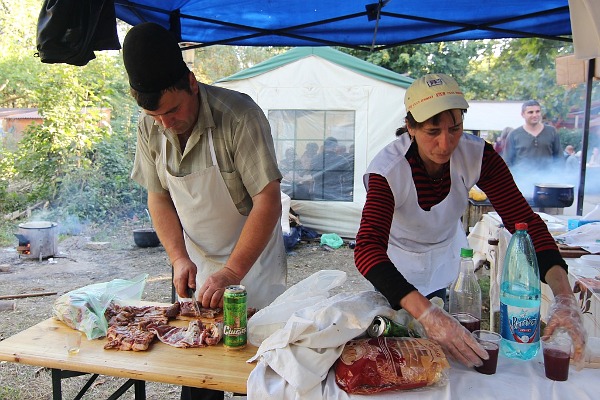
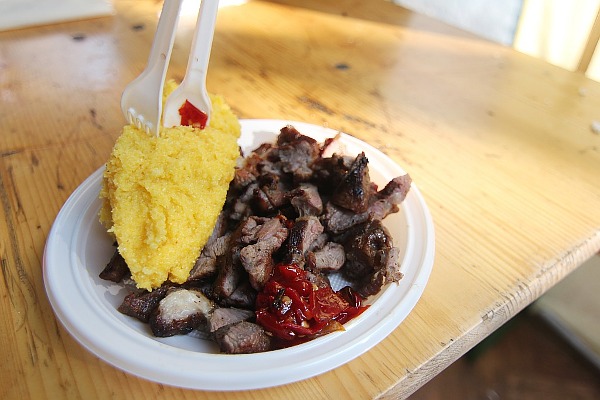
Take a big loaf of mutton pastrami, cut in into pieces. Optionally, at the same time fill some glasses with must (or wine)

pastrami

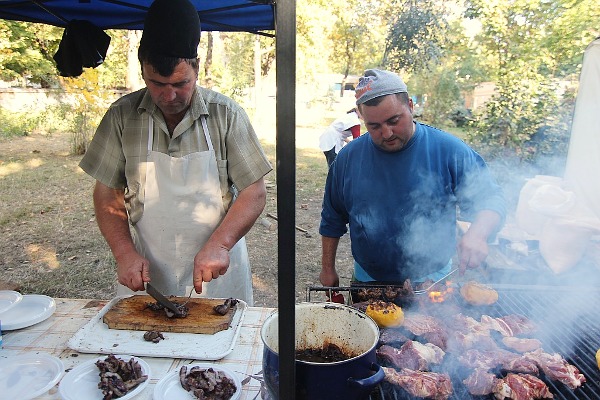
Grill the pastrami. Optionally cut the grilled pieces into smaller, bite-sized pieces.

pastrami

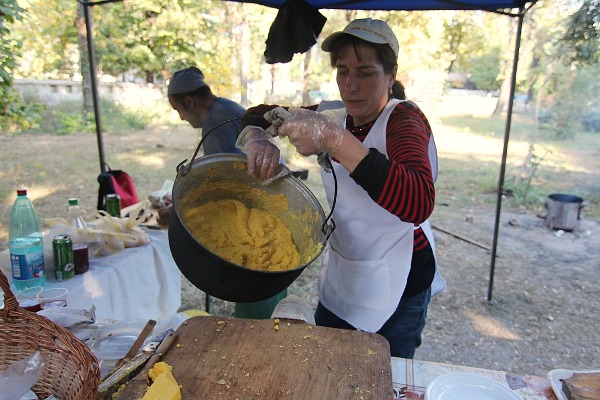
In parallel, prepare a bowl of mamaliga.

pastrami

Eat the pastrami with mamaliga. You will want the must too.

pastrami

Creative Commons LicenseThis work is licensed under a Creative Commons Attribution-Share Alike 3.0 License.

Sarmale in the pumpkin

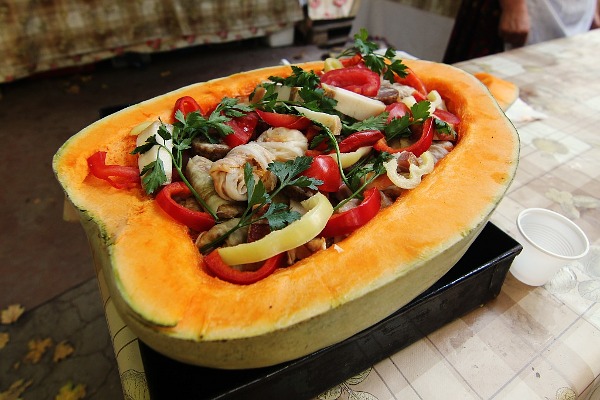
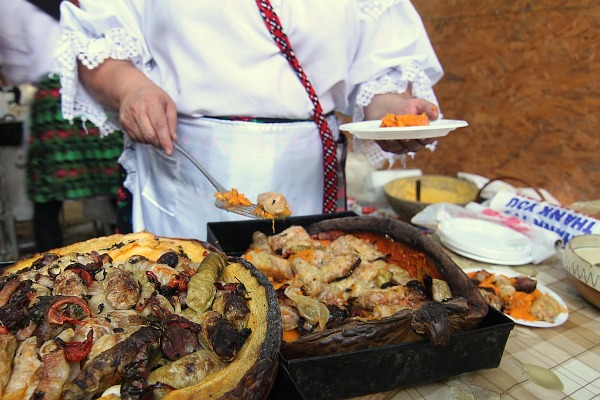
This is a less known way to cook sarmale: get a pumpkin and take out the seeds. Fill the interior with uncooked sarmale and whatever else is needed: tomatoes, peppers, smoked bacon, herbs.

sarmale

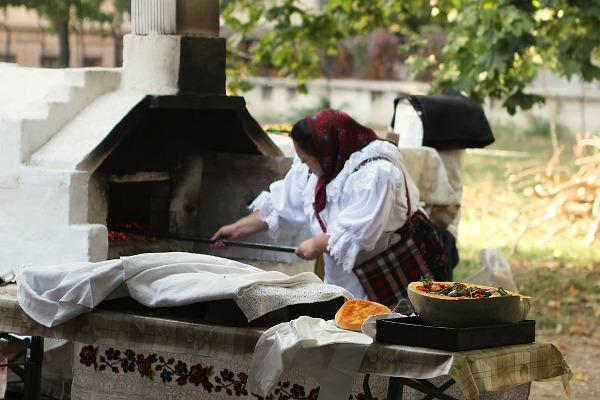
Put in in the oven and let it cook.

sarmale

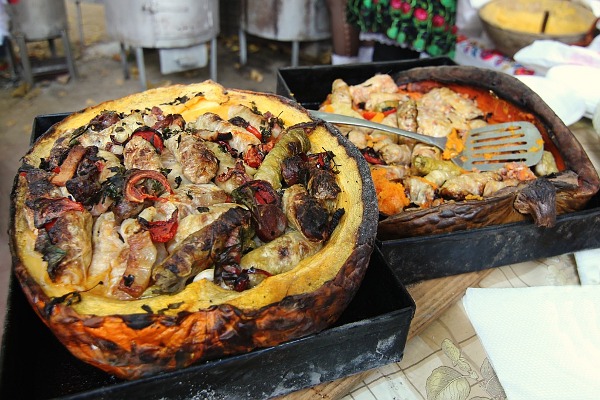
Take it out when done.

sarmale

Serve the sarmale together with a bit of cooked pumpkin pulp. Enjoy.

sarmale

Creative Commons LicenseThis work is licensed under a Creative Commons Attribution-Share Alike 3.0 License.

Japanese Night, Tea & Coffee Festival

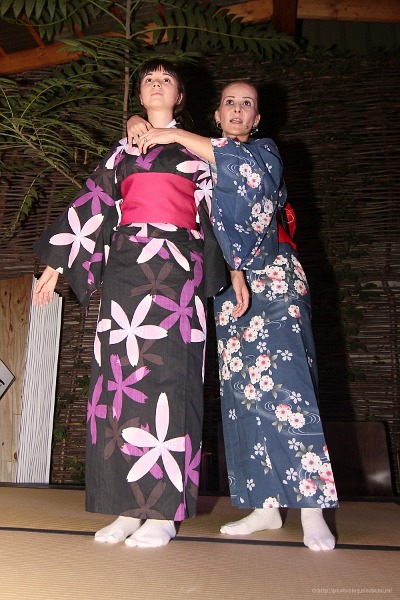
With a busy schedule, I managed to attend only the Japanese night at the Tea & Coffee Festival, which is taking place the whole week. The program started with a clothing demonstration about wearing a yukata:

yukata

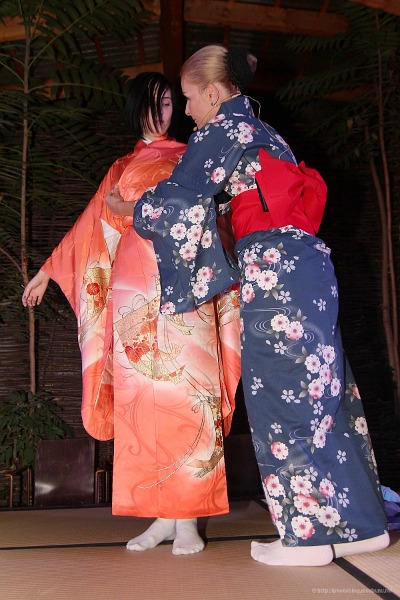
Then it got more serious, moved to a kimono:

kimono

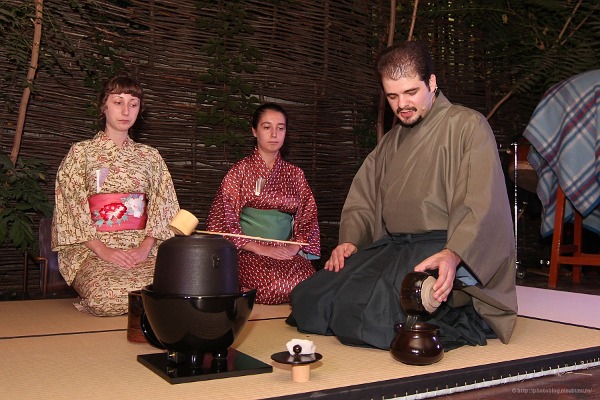
Ather the clothes, it was the time for a tea ceremony:

tea

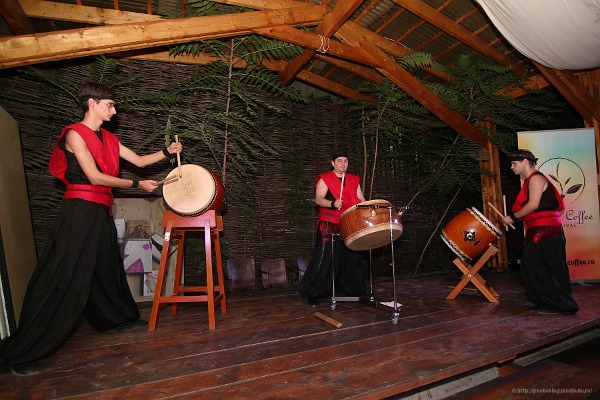
The event closed with some taiko play:

taiko

Creative Commons LicenseThis work is licensed under a Creative Commons Attribution-Share Alike 3.0 License.

Must time

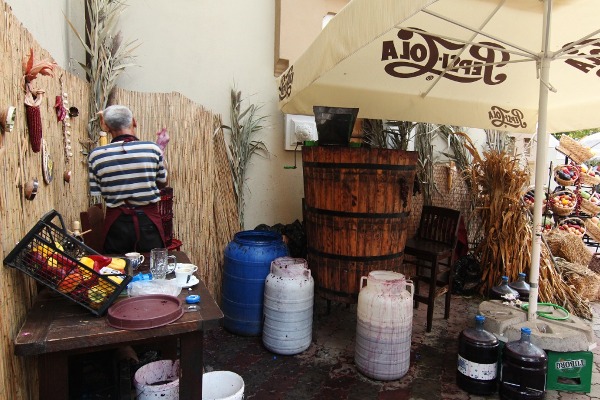
Is autumn, the season for grapes to get ripe. The wides use for the grapes is wine making, but before the fermentation they become must, a wonderful drink full of sweetness and flavor. Best served with grilled pastrami.

must making

Creative Commons LicenseThis work is licensed under a Creative Commons Attribution-Share Alike 3.0 License.

On religion and my photos

If there is one thing I try hard to avoid is being a hypocrite, this is why I question myself often. Now is one of those times 🙂

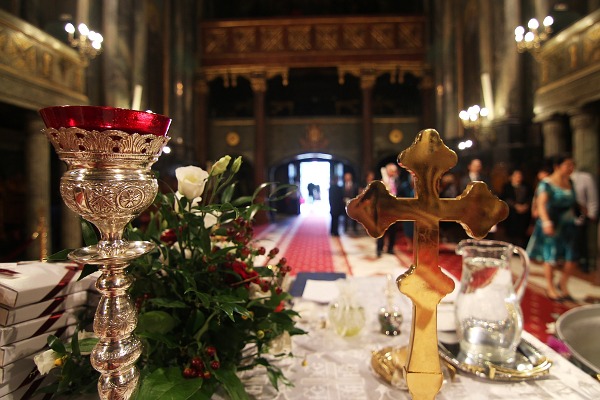
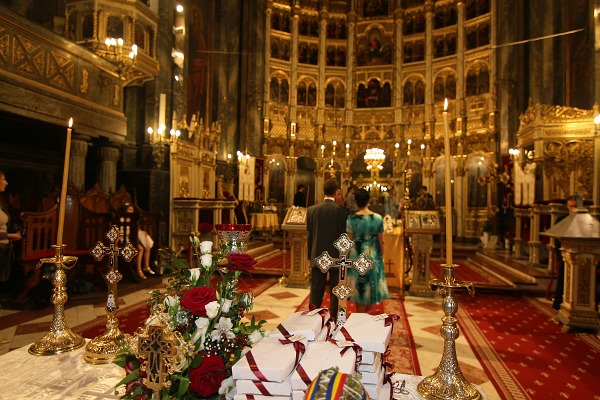
I deeply and sincerely believe religion is evil but I do photography, contributing to things like Wiki Loves Monuments I take and publish a lot of pictures of churches, monasteries and various other religious things and I also take photos at events like weddings and baptisms, where religion is a very important side. I know churches and monasteries are the bulk of historical monuments here (in medieval times very little culture happened in Romania outside the religion) and I know the society make the religious part that important in life events, but still feel a bit uneasy.

religion
religion

Creative Commons LicenseThis work is licensed under a Creative Commons Attribution-Share Alike 3.0 License.


Micu’i frate cu romănu’

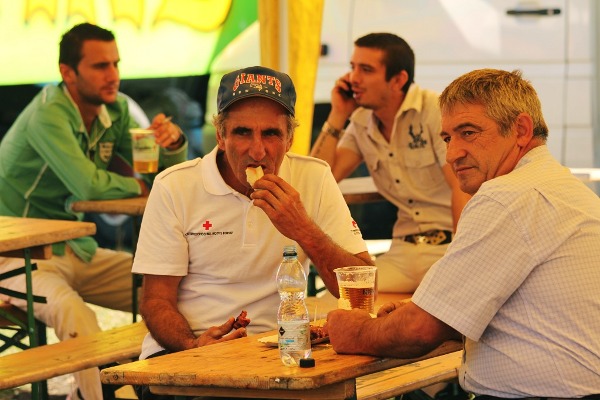
There is an old saying, “the forest is the Romanian’s brother” (ro: “codru-i frate cu românul”), which I feel like paraphrasing today, “the mic is the Romanian’s brother” (ro: “micu-i frate cu românul”), where mici is a very traditional Romanian food (a kind of sausages) which most of the time is accompanied by beer.

mici and beer

Creative Commons LicenseThis work is licensed under a Creative Commons Attribution-Share Alike 3.0 License.

Hell

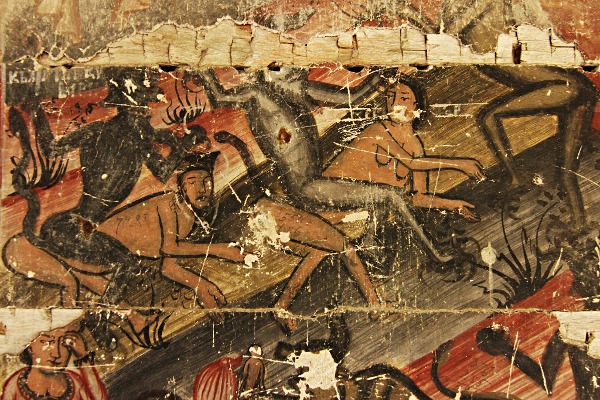
The naive painter of this old wooden church from a Romanian village had his own vision on hell and the tortures people getting there will have to endure. The painting is hundreds of years old and made on wood, so it became pretty damaged, which is a shame, but you still can understand it and have a good laugh.

hell

Creative Commons LicenseThis work is licensed under a Creative Commons Attribution-Share Alike 3.0 License.

Smoke over Vidra lake

The tree is burning slowly, not sure if due to heat or a human hand. Fortunately, the Vidra lake is close, so no disaster happened.

vidra

Creative Commons LicenseThis work is licensed under a Creative Commons Attribution-Share Alike 3.0 License.

Saramura: making of

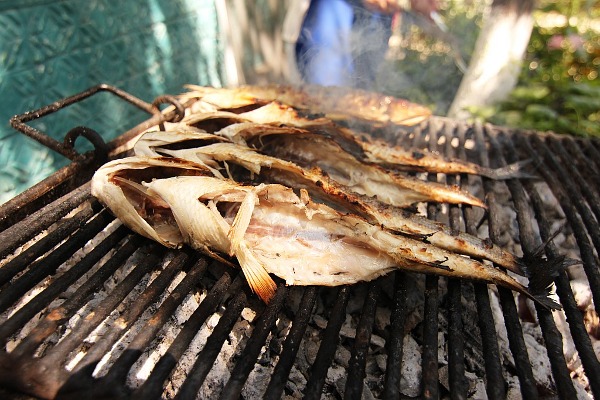
Saramură is a traditional Romanian dish, made most of the time from fish. You start by grilling the fish (mullet in this case)

saramura

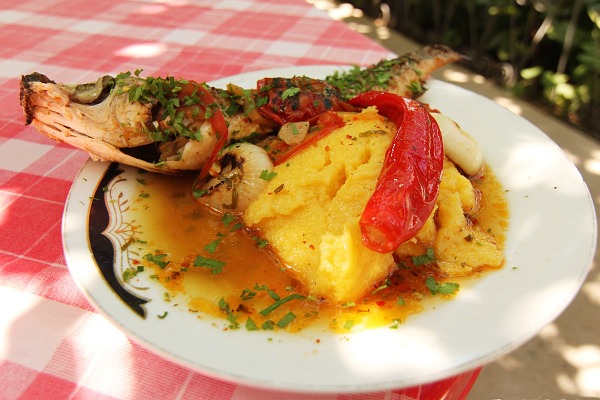
Then put the meat in a salty sauce (brine) with garlic, hot peppers and vegetables. Served with mămăligă.

saramura

Creative Commons LicenseThis work is licensed under a Creative Commons Attribution-Share Alike 3.0 License.

For a better life

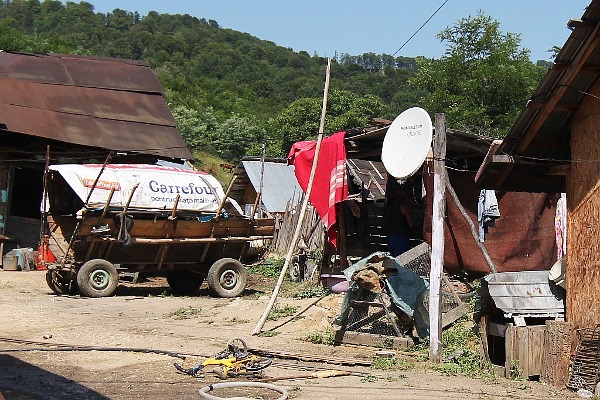
The cart hood is a plastic from the Carrefour supermarkets commercials and it says (in Romanian) “for a better life” (“pentru o viaÈ›a mai bună”). The cart is emblematic, since the gipsies here are nomads, they travel the land using those (and have a real house inside).

gipsy

Creative Commons LicenseThis work is licensed under a Creative Commons Attribution-Share Alike 3.0 License.


Horseshoe making

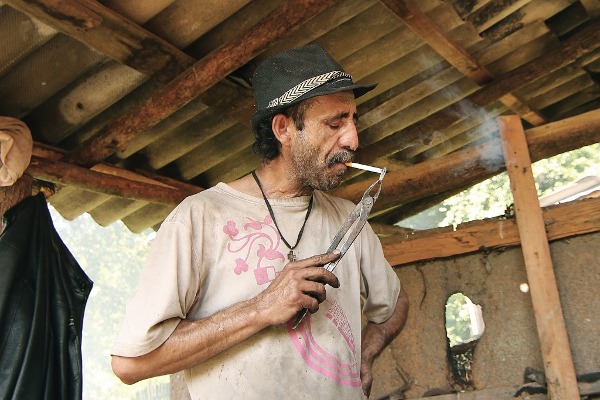
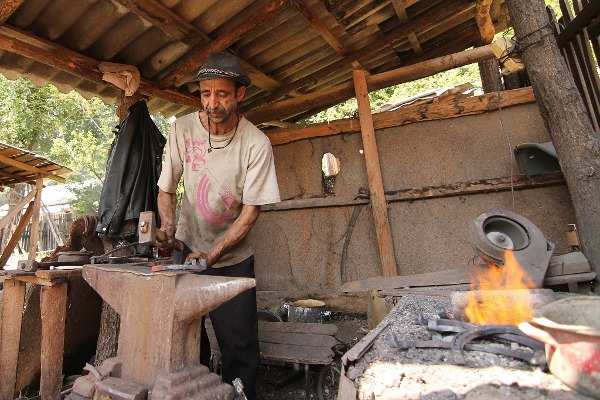
This is a story about making horseshoes, it happens in a common Romanian village, at its side, in the part inhabited by the gipsy community.

gipsy

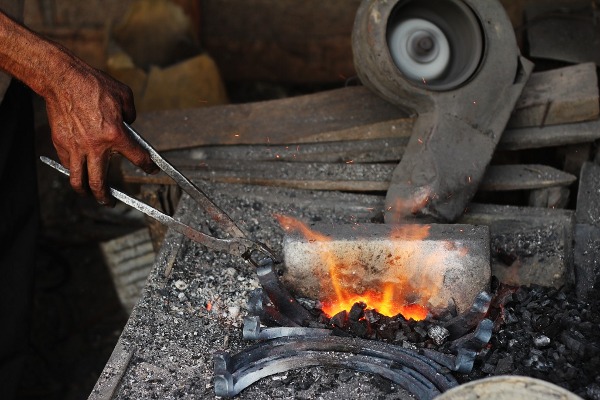
Is about taking the raw steel and with the help of the fire, just like the ancient god Vulcan, and making it into shapes.

gipsy

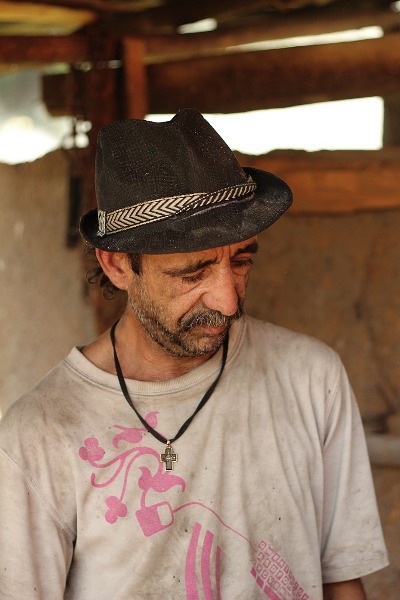
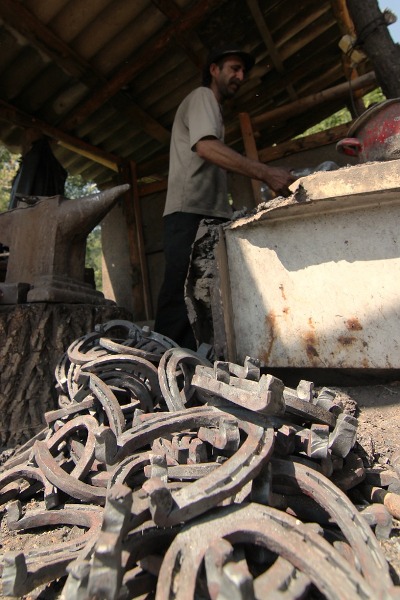
The hero is no god, but a simple, humble man:

gipsy

Still, he has the power over the fire and steel

gipsy

And this is how horseshoes are made.

gipsy

Creative Commons LicenseThis work is licensed under a Creative Commons Attribution-Share Alike 3.0 License.

Incursion in Luana Land

Sorry for the following long post, is unusual but covering the topic in another way it would be harder. Recently I had the opportunity for a trip in Buzău Mountains, also known as the kingdom of Luana, a less known part of Romania, where out guide told us a lot of legends and stories from prehistory, ancient history, medieval history, modern history and current times, a fabulous mix which would make, I think, good material for something like an entire season of Stargate SG1. Take all stories below with a grain of salt (I do that).

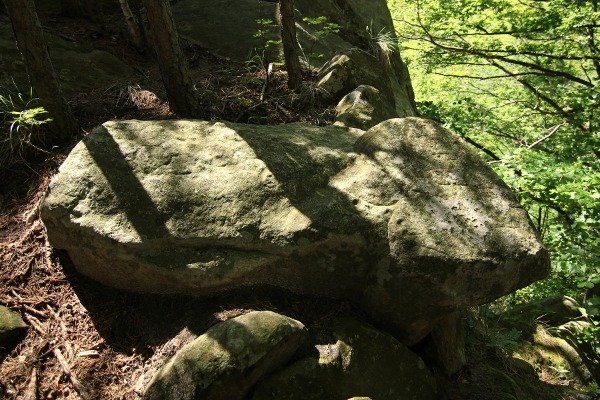
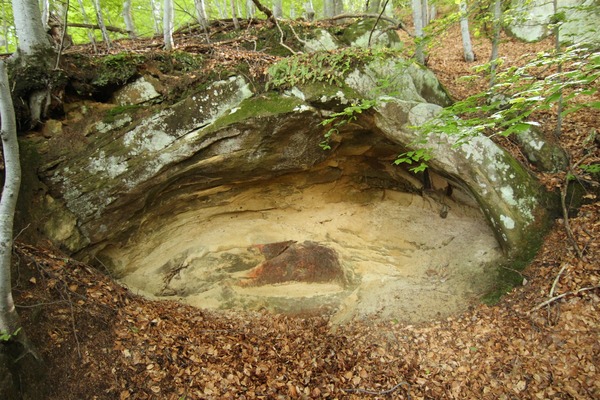
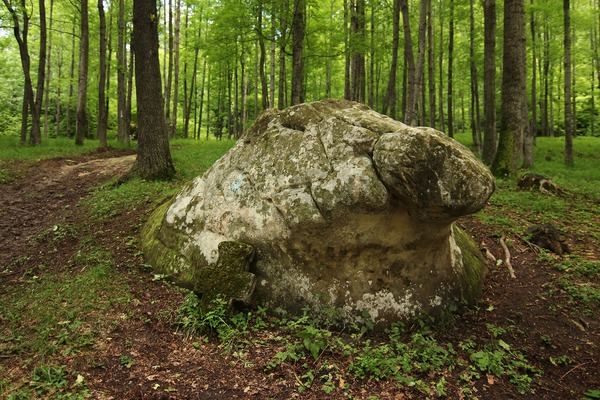
The first objective was an animal (reptile) shaped stone, which have some old inscriptions and based on its shape, may have been used as a sacrifice altar back in the ancient times. It also has a base that may cover some things below.

luana

Then a circular portal, pretty much looking like the Stargate portals which may be a gate, if you know how to activate it.

luana

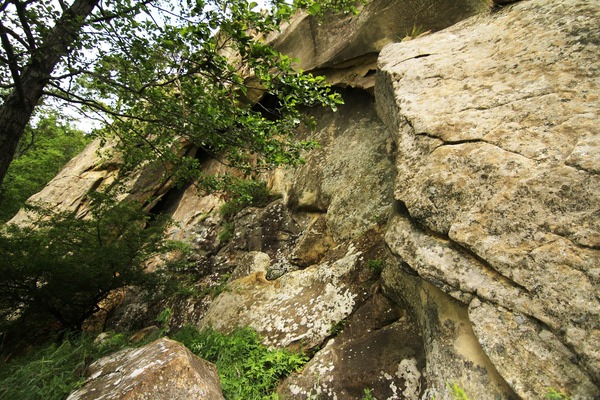
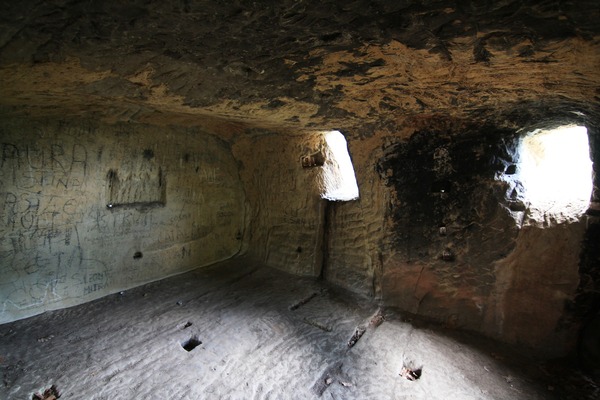
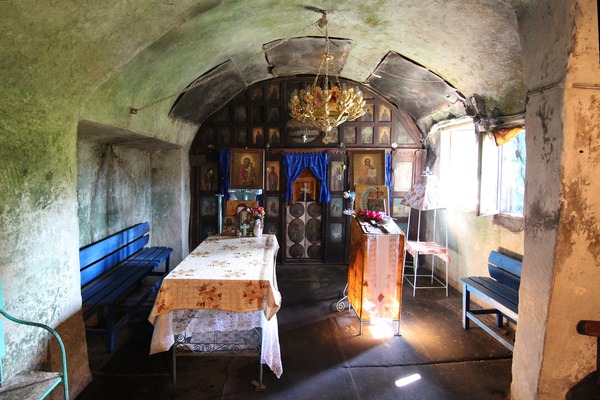
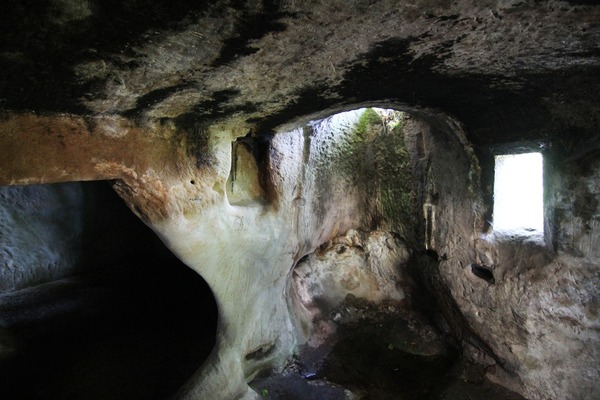
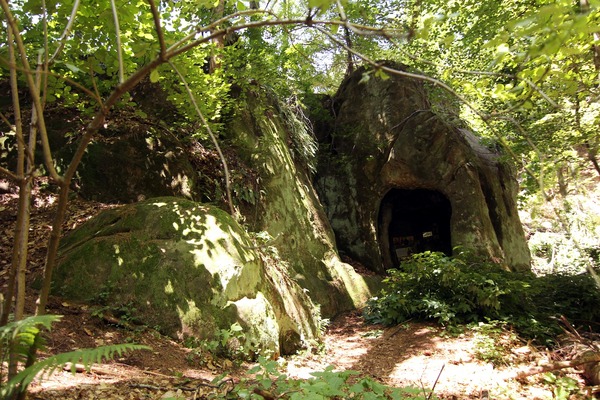
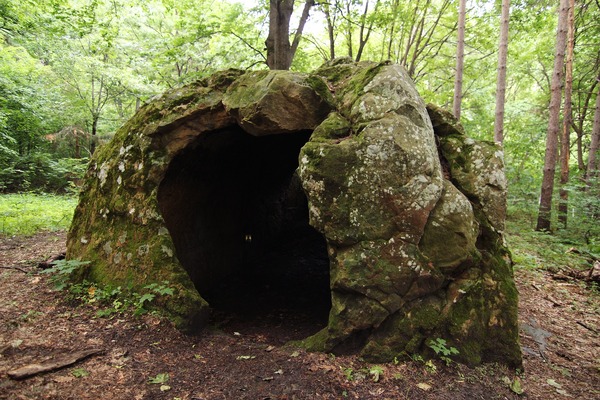
The cell of hermit Dionisie Torcatorul is documented from the medieval times, but is a cave which, upon the looks of the carving may have been used by Dacians in the ancient times and even before that, in the stone age.

luana

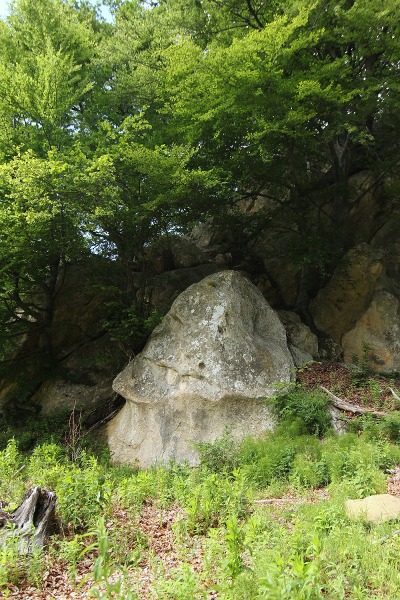
As many other objective from that age, Dionisie’s cell is guarded by a phallic symbol/sculpture:

luana

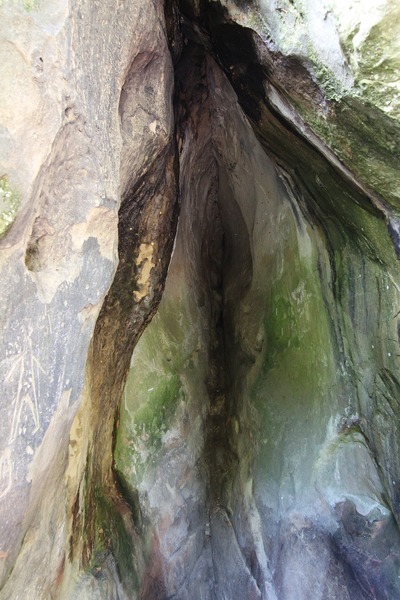
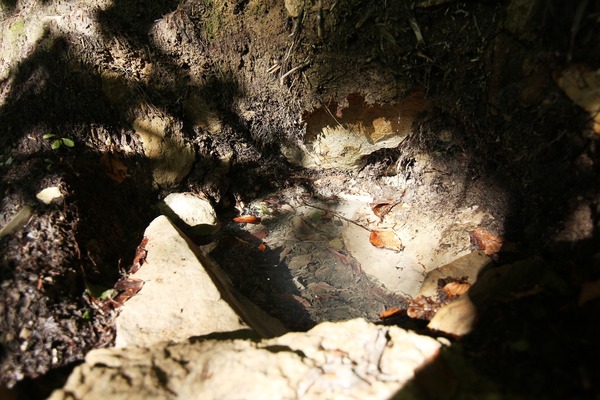
Fundul Peșterii is something unique as is a stone age / prehistoric living place in a vaginal shape:

luana

And next to it, there is another phallic symbol:

luana

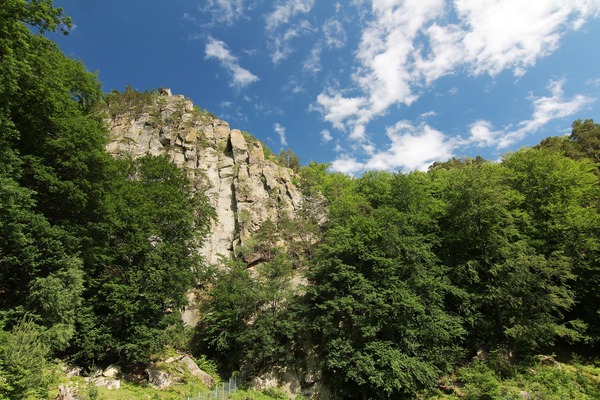
Tihăria is a mountain, but is also a wall, like a part of the walls of the citadel of the giants, who lived there before humans. Maybe the city of king Luana, which was guarded by a sun:

luana

Somewhere in the forests there are springs with water of life, which king Luana used to heal and revive people. Those may be the sulphuric springs I drank from myself (I don’t feel special now):

luana

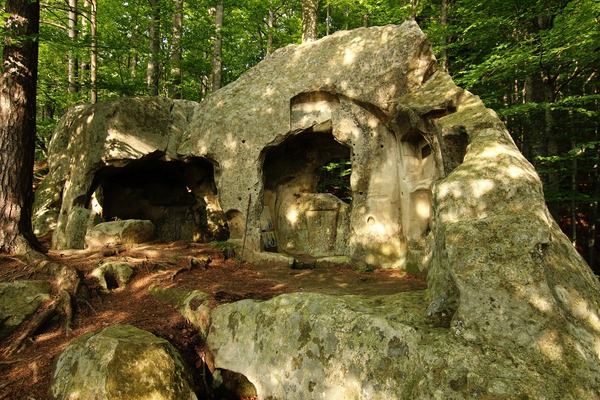
Also carved in stone is Iosif’s little church, which is also documented from medieval times and probably lived long before that.

luana

At Scaunele Spătarului, the legendary Negru Voda, founder of the country, brought his captains and have them titles and lands around, their names can be found in the mountains nearby.

luana

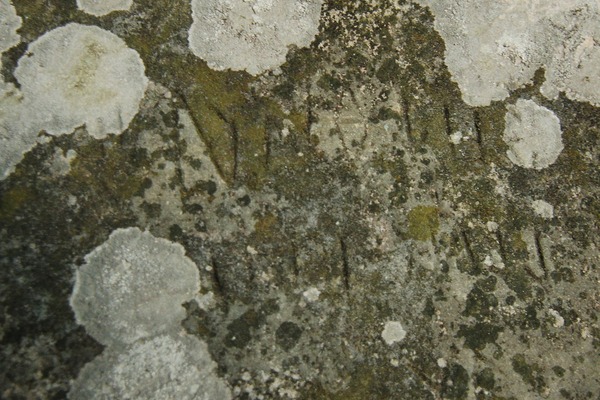
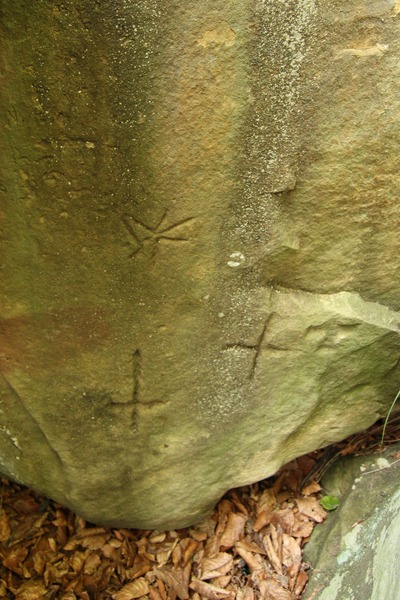
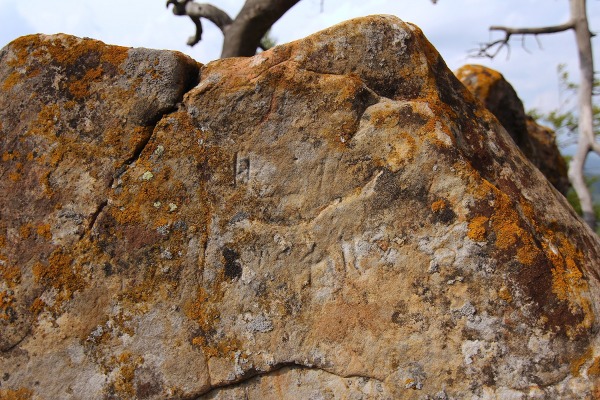
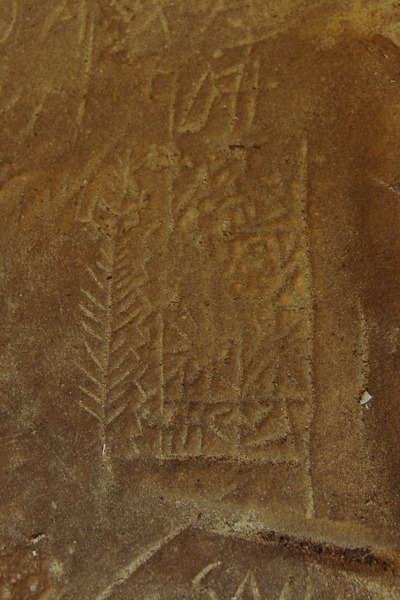
And you can see with your eyes prehistoric writings:

luana

The cave church in AluniÈ™ is known from medieval times, but it was built on an older cave:

luana

The living quarters next to it are unlike Christian living quarters, so they have to be Dacic, at least

luana

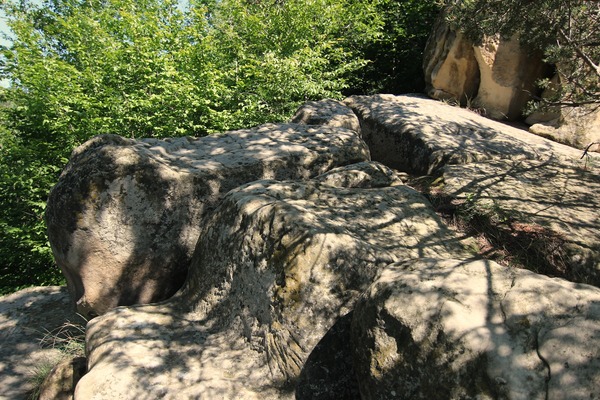
As the sacrificial stones and altar above:

luana

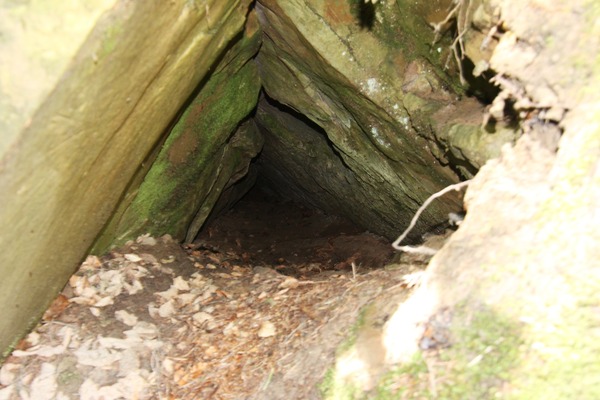
There are tunnels everywhere, in many cases triangular and they have magic properties, possibly teleporting people in various places far away:

luana

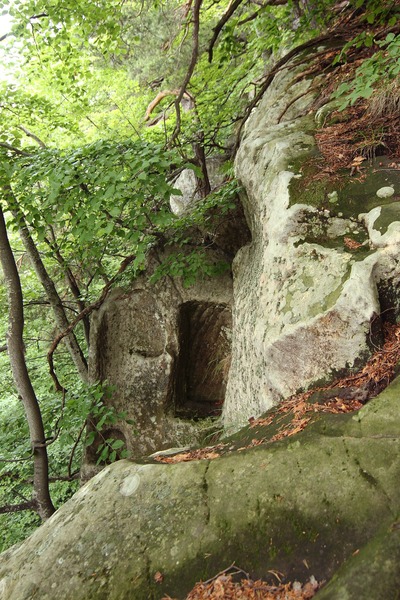
Piatra Ingăurită was again a medieval hermit church hosting people fleeing away from anti-Christian prosecution, but by the look of the carving, it seems used since stone age

luana

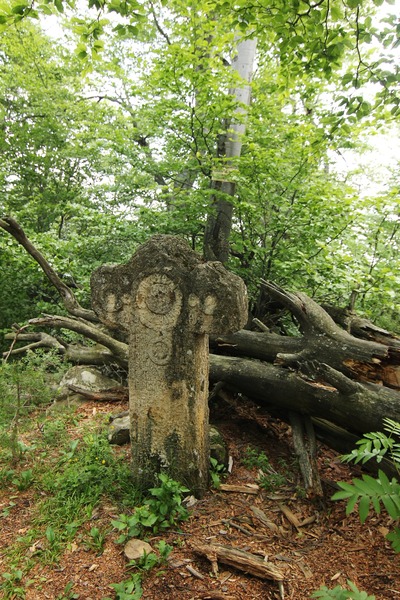
Crucea Spătarului is a sign on the mountain, from more modern times (XIX century) when a noble wanted to hide his treasury

luana

As there is near a map for finding it. If only one can read it…

luana

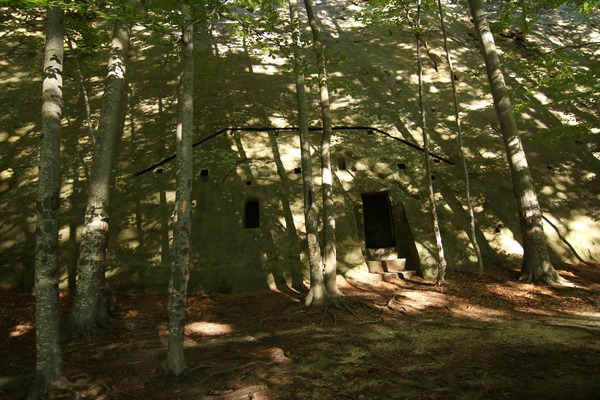
Before the forest grew, Ghereta was a good observation point over the entire valley and the entrance in the giants (before the human times) citadel:

luana

Bucătăria looks like a kitchen and hat smoke leftovers on the ceiling, but it looks like the place for the holly fire of Dacians:

luana

ÈšurÈ›udui mountain is an old place, with prehistoric carvings, but it was also a place where supposedly the military in the 80’ies conducted paranormal researches

luana

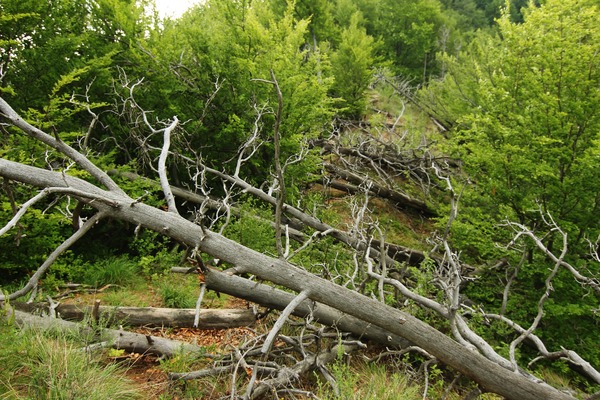
And when the experiments ended with a disasters, they dynamited the place (I am not sure the dynamite effects looks like that) and blocked the path by cutting trees

luana

Agatonul Now was yet another medieval hermit church for refugees:

luana

And before it, Agatonul Vechi was used, until destroyed by an earthquake:

luana

Closer to the valley and civilisation, the Fundătura monastery was prosperous back in its medieval times:

luana

Near Rugionasa you can see pictographic writings, similar with Sumerian tablets:

luana

And also a yearly calendar, reminding of the Sumerian civilization

luana

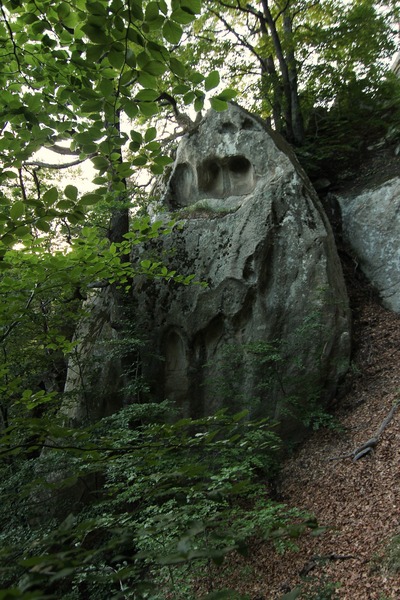
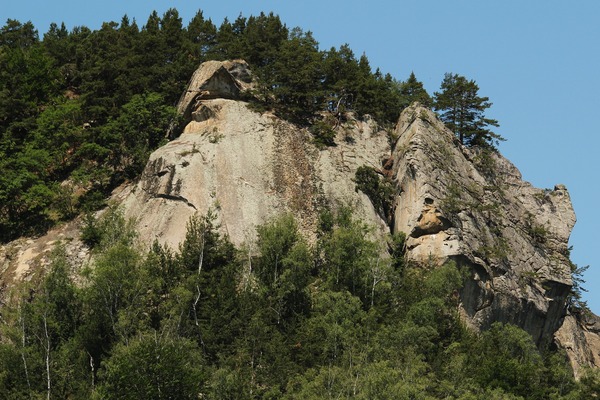
If you raise your eyes, on the other mountain you can see a human face, a bearded Dac

luana

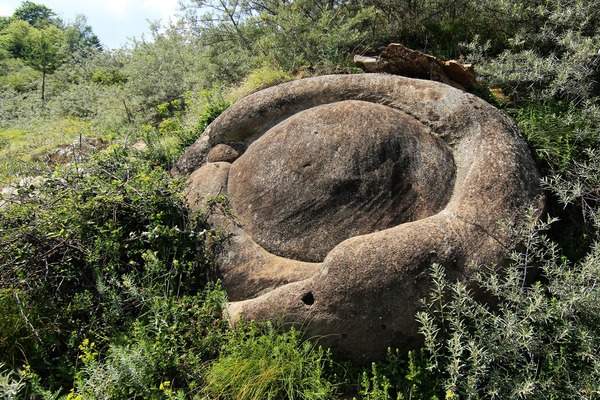
Not far from there, in UlmeÈ›, you can find some trovants or babe, curiously made growing stones, which you can’t tell if they are natural or man made.

luana

An Stargate SG1 season I said? Well… thinking there are many other place we lacked the time to see, I would say maybe two.

Creative Commons LicenseThis work is licensed under a Creative Commons Attribution-Share Alike 3.0 License.

A trip to fortified churches in Transylvania

I had the opportunity for a trip to medieval fortified churches in the county of Sibiu in Transilvania, those are built by Germans around the XIII century and preserved in various states, from ruins to fully functional. The first to visit was Cisnădie, which is well preserved and functional, being located in the middle of the city with the same name:

cisnadie

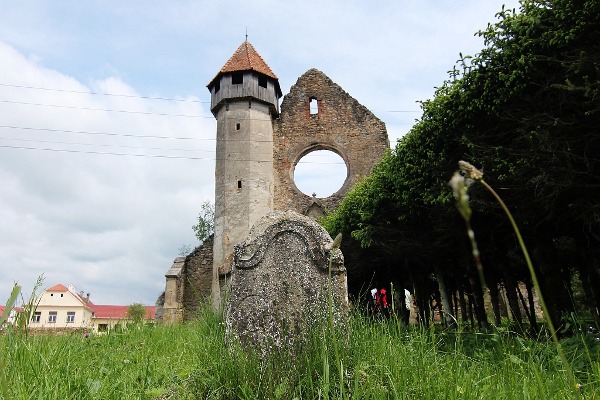
Then Cârța, a spectacular ruin in a small village, probably the first Gothic building from this region:

cisnadie

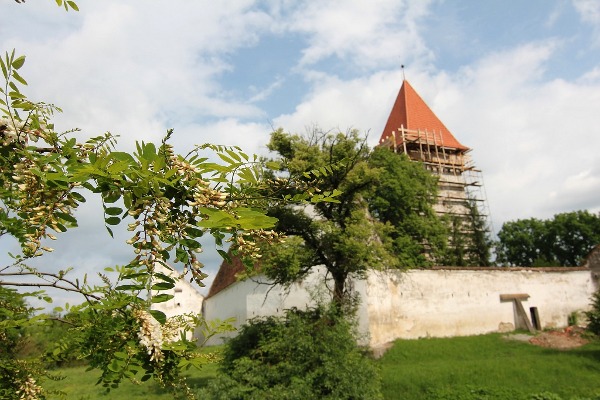
Dealu Frumos was hard to photograph being under restoration works and covered with scaffolds:

cisnadie

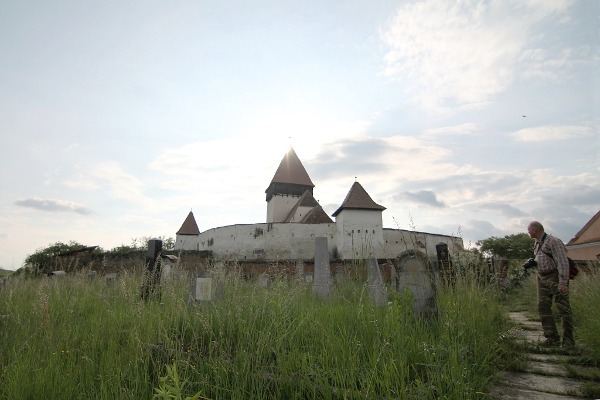
Hosman is a larger complex and next to it has a large cemetery:

cisnadie

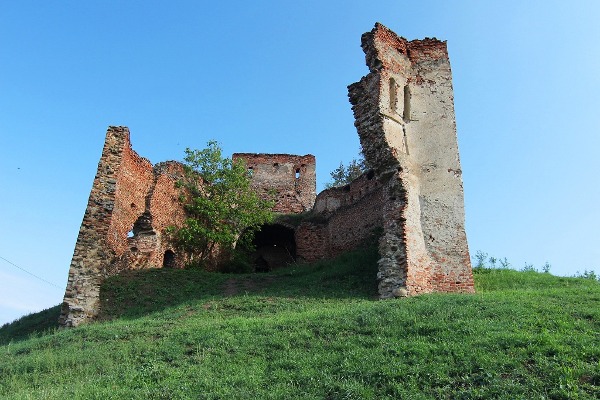
Slimnic is very large and also very damaged by time and hostile forces:

cisnadie

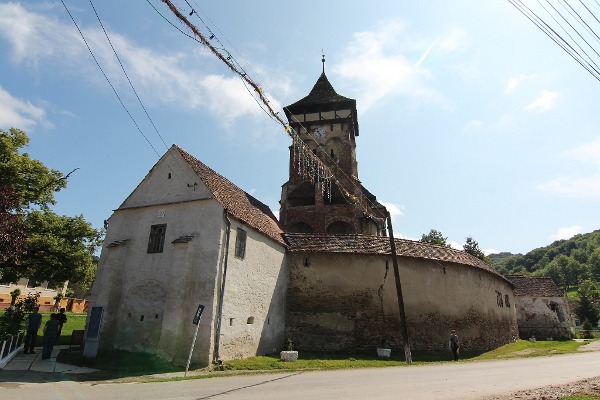
Apparently small on the outside, Valea Viilor has plenty of things inside waiting to be discovered:

cisnadie

The last visited, and probably the most complex, was Biertan:

cisnadie

Creative Commons LicenseThis work is licensed under a Creative Commons Attribution-Share Alike 3.0 License.

Vienna: beer festival

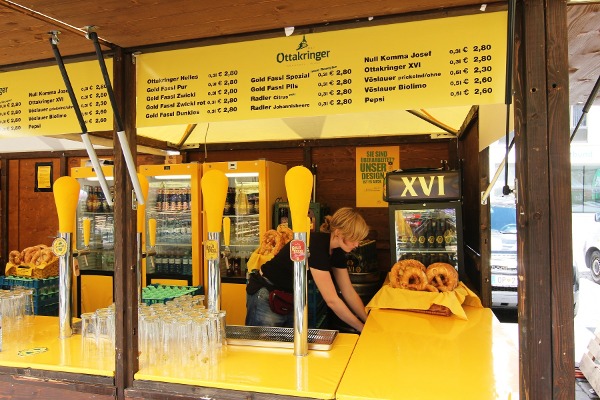
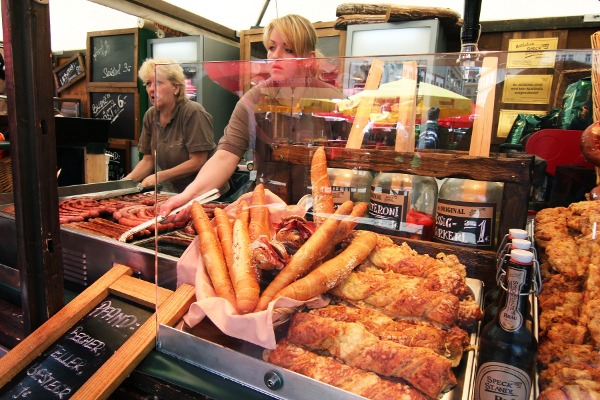
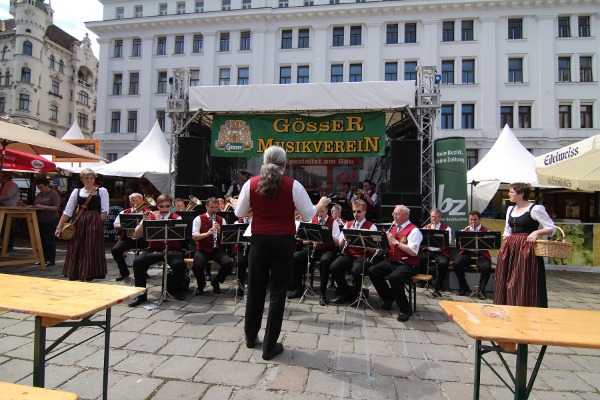
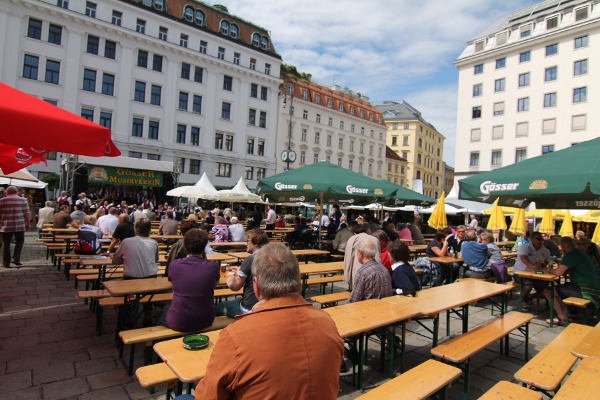
Another totally random encounter in Vienna was a beer festival taking place near the city center, a few hundreds of meters away from the St. Stephan cathedral. The setting was not very different from the festivals at home, the same tables and chairs, some different brands of beer and food, a much larger orchestra playing.
beer festival
beer festival
beer festival
beer festival

Creative Commons LicenseThis work is licensed under a Creative Commons Attribution-Share Alike 3.0 License.